

For professionals
For professionals
24 février 2026
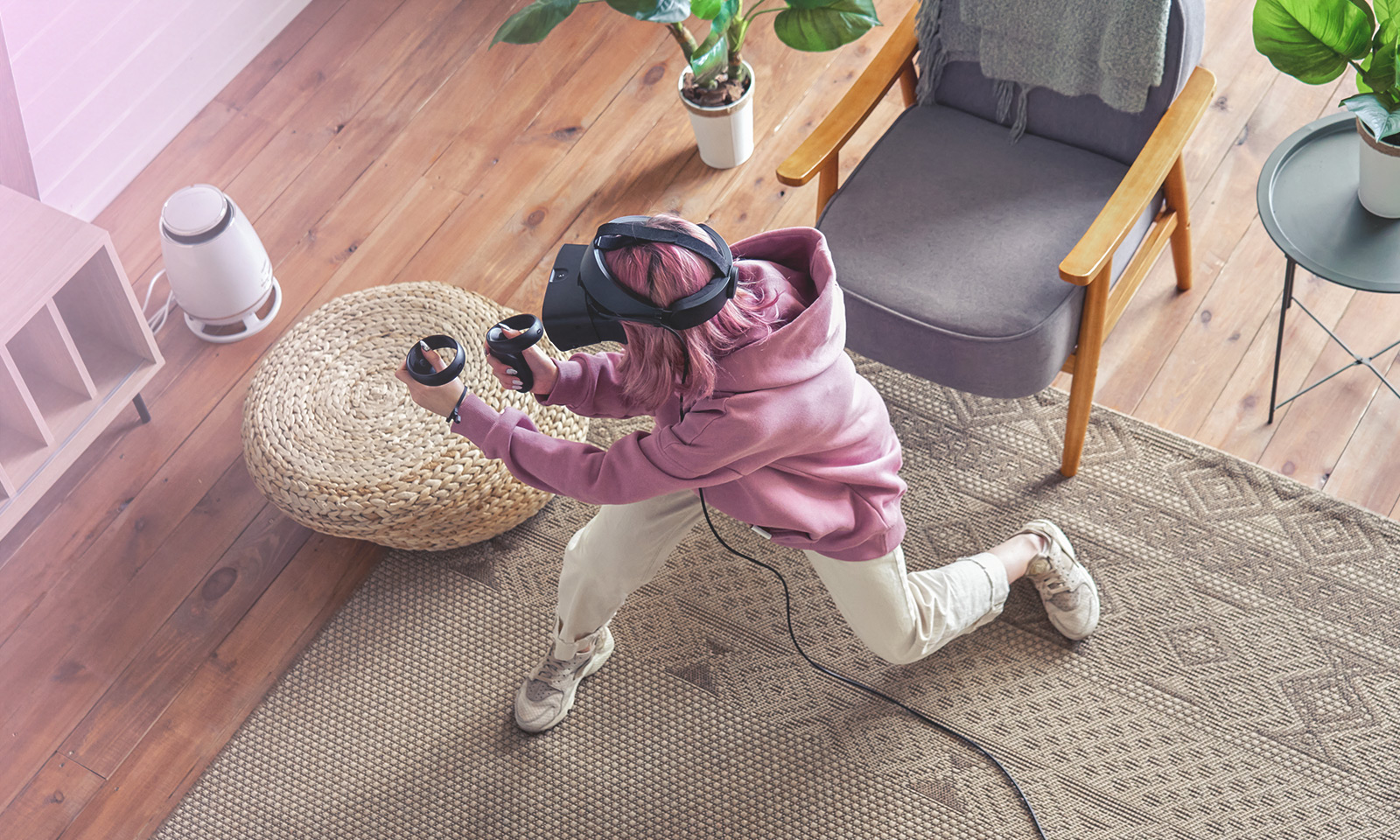
Virtual reality is gaining popularity among teens and young adults. However, its highly immersive nature increases the risk of excessive or problematic use. Do you know enough about the topic to provide proper support to users and their parents?
Pierre-Guy Lavoie is an addiction prevention worker and co-manager of Action Toxicomanie’s support service for parents and loved ones. Based in the Mauricie–Centre-du-Québec region, the organization promotes overall health and addiction prevention (vaping, alcohol, cannabis, screens, etc.) among youth aged 10 to 30.
PAUSE met with him to better understand the issues related to virtual reality use among teens and young adults.

Pierre-Guy Lavoie is an addiction prevention worker and co-manager of Action Toxicomanie’s support service for parents and loved ones
How did you become aware of the difficulties related to virtual reality use?
It came up during a follow-up on screen use with a student at the school where I work. He told me he had received a virtual reality headset as a gift from his parents and that he really enjoyed using it. However, after long gaming sessions, he reported experiencing various discomforts, such as headaches, nausea, dizziness, heart palpitations, blurred vision, and excessive sweating. He also said he found it harder to stop using it compared to other gaming consoles.
What are the most popular uses of virtual reality among teens and young adults?
For the student I work with, the most popular uses are platforms that allow socializing, that is, playing and interacting with other users in public or private spaces. Other popular uses include active games (such as dancing, boxing, and lightsaber battles), simulation games (such as driving, flying, and climbing), and cooperative games (such as shooting, adventure, and exploration games).
What makes virtual reality so captivating, but also potentially problematic?
It’s the level of immersion. Virtual reality is not a traditional screen like television, gaming consoles, smartphones, computers, or tablets. The headset completely covers the eyes, and combined with sound, it cuts the user off from the outside world, greatly increasing the risk of losing track of time. The avatar, controlled through body movements, also allows for total immersion.
Studies confirm that the brain processes the virtual reality experience almost as if it were real. The sensations and emotions it generates are therefore more intense. All of this makes virtual reality highly engaging and much harder to stop using, especially for teens whose brains are still developing and more sensitive to strong stimulation.
Because of its intense immersive effect, virtual reality can involve risks such as harassment, emotional identification with the avatar, non-consensual sexual interactions between avatars, or exposure to inappropriate language and behaviours.
Virtual reality can also be used as a form of escape by young people who want to forget or soothe their emotions, which can, in some cases, lead to Problematic Internet Use (PIU). Studies suggest that in certain virtual reality environments, up to 20% of users may show signs of PIU.
That said, it is important to distinguish between intensive use and problematic use: not all young people who spend a lot of time in virtual reality develop an addiction.
What signs do you find particularly concerning among teens and young adults who use virtual reality?
Signs of loss of control are especially concerning, and can include increased time spent using virtual reality, disruptions in eating and sleeping habits, fatigue and decreased concentration, irritability when a session must be interrupted, using virtual reality as emotional escape, and social isolation, whether online or offline.
Several factors can reduce the risks associated with virtual reality: flexible but present parental supervision, setting limits, alternating with screen-free activities, maintaining healthy lifestyle habits, and the young person’s ability to recognize internal signals of fatigue or overload.
It is important to note that virtual reality is not a problem in itself. The goal is therefore not to ban it, but to equip young people with the tools they need to use it in a conscious, balanced, and safe way.
What advice would you give to professionals working with teens and young adults regarding virtual reality?
First, virtual reality use and its risks should not be minimized. If a young person opens up to you about it, ask questions about how they use it, their ability to end a session, and how they feel afterward.
It is very important to involve parents by providing them with accessible, concrete, and non-judgmental information about virtual reality and its risks. In my practice, I see that parents often have a limited understanding of screens in general, and this lack of knowledge may be even greater when it comes to virtual reality, which they often see as an extension of traditional video games. However, virtual reality requires a different level of vigilance from parents because it adds a dimension of immersion that standard screens do not have.
Remind them to discuss virtual reality with their child by asking them questions about their experience, then observe any changes in behaviour. The goal is not external control, but the gradual development of self-regulation by the young person, i.e. helping them recognize when their use becomes difficult to manage, learn to set their own limits, and disengage without conflict, among other things.
I believe that the more parents understand how virtual reality works and the emotions or behaviours it can generate, the more confident they will feel in supporting their child’s use, rather than reacting only when a problem arises.
Are you familiar with PAUSE’s professional space? To read more content, click here.
